
Inside the Mind of Daniel Holter

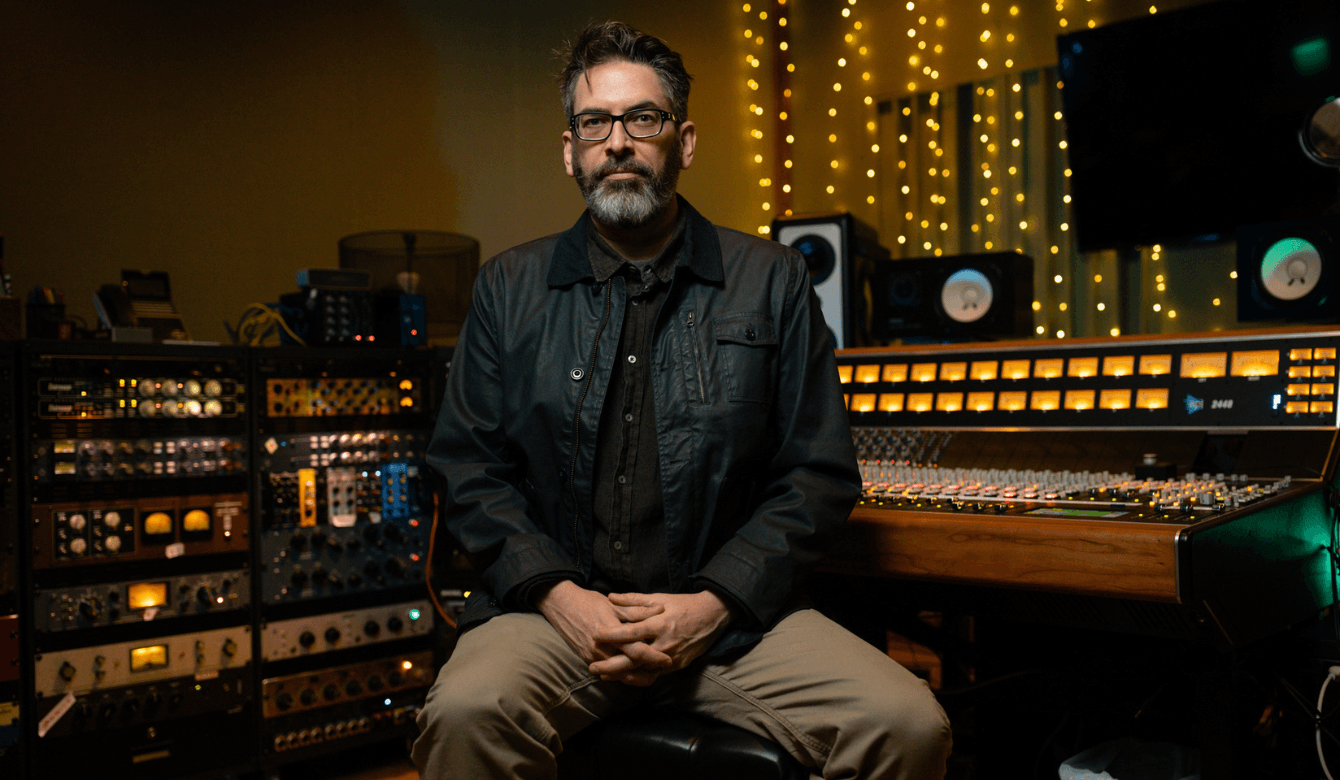
Daniel Holter has spent decades building production music catalogs, from founding and scaling his own, to selling and rebuilding them across multiple eras of the industry. Today, as the founder of The License Lab, Holter leads a collection of purpose-built labels within Universal Production Music, each designed with a distinct creative and strategic point of view.
But his perspective on the industry has evolved.
Production music is often framed as a creative pursuit, write great tracks, land placements, build momentum. But for Holter that framing misses the point entirely.
Across three decades, multiple catalogs, and several ownership cycles, he has come to see the business for what it really is: not just music, but systems. Not just songs, but structure. Not just moments, but longevity.
What he’s building with The License Lab isn’t just a catalog, it’s an ecosystem designed to last.
The Part of the Industry No One Talks About
Holter is candid about what took him time to fully internalize: the work that actually sustains a career in production music isn’t always the creative part.
“What happens beyond the music… is something far less sexy at face value: metadata that holds up across platform changes, delivery schedules your partners can depend on, catalog coherence that builds a recognizable identity over years rather than quarters.”
It’s a reality he believes the broader market still hasn’t fully reckoned with. “It sells the dream of the placement rather than the discipline of the catalog.” The composers who last, he says, eventually realize they’re not just making music, they’re running a publishing business.
A Shift in Focus: From Volume to Vision
When The License Lab launched in 2011, the strategy was scale—releasing dozens of albums a year to build a foundation. That phase served its purpose. This one is different.
“That foundation has been in place now for years, and this chapter is about something different entirely.”
Now, within the Universal Production Music ecosystem, the focus is on what others often avoid: deep concepts, niche ideas, and projects that take time to get right.
“We’re doubling down on projects that most independent libraries don’t have the time, budget, or appetite for… unusual genre combinations, deep concept albums.” And in a rapidly changing landscape, one priority stands out: “In an era when AI-generated production is flooding the market, the thing that becomes genuinely scarce is music that couldn’t have been made any other way.”
Building Labels with Purpose
At The License Lab, music isn’t organized by genre—it’s built around intent. “Genre describes what music sounds like, not what it’s for or who built it or why.”
Each label begins with a distinct idea:
-
Analog Champion, rooted in vintage recording techniques
-
UNDERscore, designed structurally for editorial flexibility
-
LMNTL Records, focused on developing artist-level talent
“That’s not a genre decision, it’s an architectural one.” The result is a catalog shaped less like a library of sounds and more like a collection of systems.
Taste, Originality, and What Actually Stands Out
For Holter, most music clears a basic threshold—it sounds good and it works. What’s rare is something truly distinct. “The first two are table stakes, but the third is where most submissions fall apart.” In a space saturated with technically competent output, differentiation matters more than ever.
“We don’t need more music, we need your music. A specific perspective… something that couldn’t have come from anyone else.” That philosophy extends beyond curation into development—building a roster of composers whose work reflects something individual and recognizable.
Albums that Define the Vision



Where it all comes together
What Daniel Holter is building with The License Lab isn’t just a catalog, it’s a long-term system designed for discovery, identity, and longevity. In an industry often driven by speed and output, his approach is deliberately different: less about chasing moments, more about building something that lasts.